This Would Actually Make America Great Again
Throughout Donald Trump'due south tumultuous presidential entrada and tenure, journalists and scholars sought to explicate his entreatment to many American voters. In the 2022 presidential election, as many as nine 1000000 voters who previously supported Barack Obama, the first Blackness president, voted for Trump despite his inflammatory race-focused rhetoric (Skelley, 2017). 1 concept repeatedly emerged within these discussions equally a mainstay of Trump'southward political appeal: that of nostalgia, broadly defined as a bittersweet longing for the past. Testify of Trump's appeals to an before time in American history accept been cited from the first of the 2022 presidential campaign through his failed 2022 reelection campaign, ranging from the salient nostalgic reverie of the "Make America Neat Again" entrada slogan (Samuelson, 2016) to more coded political rhetoric promising White, working grade Americans a return to times that have been lost (Brownstein, 2016).
Some accept hypothesized that such cornball rhetoric may capitalize on voters' latent feelings of threat to their economic welfare, or to the racial or cultural homogeneity of American culture (Brownstein, 2016; Smeekes et al., 2020). On a broad scale, nostalgia focused on nationality is a prominent feature of correct-wing populist political party rhetoric, and prove from voters in kingdom of the netherlands suggests that the emphasis of stigmatizing outgroups and preserving cultural hegemony within nostalgic messaging is what explains the link between nostalgia and right-wing populist support (Smeekes et al., 2020). In the United states, several studies provide potent evidence of a link between support for Trump and grouping prejudice. For case, survey research has indicated that racial and anti-immigrant resentment strongly predicted voters' support of Trump in 2016, more than so even than voter's feelings of economic threat (Hooghe and Dassonneville, 2018; Mutz, 2018; Schaffner et al., 2018). Additionally, a longitudinal assay of police reports evidenced a significant increment in detest crimes reported in Trump-supporting counties in the 6 months post-obit the 2022 presidential ballot (Edwards and Rushin, 2018). However, no research has of even so established whether Trump's nostalgic rhetoric may be associated with voters' attitudes toward racial outgroups. To this end, in this newspaper, we present bear witness that national nostalgia, an emotion distinct from personal nostalgia, is associated with increased prejudice as well as support for the populist messaging of Donald Trump.
The Sociality of Nostalgia
Nostalgia is a mostly positive emotion that increases self-regard, attenuates cocky-esteem defence, enhances meaning in life, increases perceptions of self-continuity, and lessens feelings of existential threat (Wildschut et al., 2006; Routledge et al., 2008). Most people report experiencing nostalgia on a regular basis (Wildschut et al., 2006) and frequently structure their nowadays in apprehension of experiencing nostalgia in the time to come (Cheung et al., 2020). Nostalgia is triggered in various ways, including by music, scents, and reflecting on past momentous events (Barrett et al., 2010; Reid et al., 2015; Sedikides et al., 2015b). This emotion too serves vital relational functions, increasing social connectedness and perceived social support (Sedikides et al., 2008).
The social connectedness function of nostalgia is a main avenue through which nostalgia confers positive psychological benefits. Although cornball memories are more than likely to be evoked while experiencing negative bear upon (Wildschut et al., 2006) and loneliness (Zhou et al., 2008), the content of nostalgic memories evoked during these emotional states seem to human action as a "repository" of positive touch, positive self-regard, and social connectedness (Sedikides et al., 2008, p. 306). The content of cornball memories is predominantly social, including recollections of close others, important social events, or tangible objects reminiscent of loved ones (Wildschut et al., 2006; Batcho et al., 2008). Every bit a result of this, nostalgic memories seem to indirectly regulate these positive emotions by evoking and making more than salient one's symbolic connections with others (Sedikides and Wildschut, 2019). For example, nostalgia felt in response to loneliness has been shown to reduce perceptions of isolation and low social support (Zhou et al., 2008). In organizational contexts, nostalgic emotions buffer the negative effects of low social support (due to procedural injustice) on reduced cooperation (van Dijke et al., 2015).
Importantly, those who are more likely to experience nostalgia (i.e., those high in personal nostalgia) are also more motivated to control prejudicial feelings and reduce their expression of prejudices against outgroups as a upshot of these positive benefits (Cheung et al., 2017). Four studies of Caucasian Americans examined the links between personal nostalgia and the expression of both blatant and more than subtle prejudice toward African Americans (Cheung et al., 2017). They found that the link between personal nostalgia and prejudice reduction was mediated past feelings of empathy, suggesting that the experience of nostalgia offers advantages beyond the self.
National Nostalgia vs. Personal Nostalgia
The link between nostalgia and sociality becomes more complex when considering nostalgia felt for one's group. Although nostalgia felt at the private level confers both intra- and interpersonal benefits, group-based nostalgia appears to have a distinct psychological profile from personal nostalgia. Group-based emotions, as distinct from individual-level emotions, arise when individuals self-categorize with a social group and integrate the group into their sense of self (Seger et al., 2009). Furthermore, grouping-based emotions tin can differ markedly from their analogous individual level counterparts, such equally when an private might feel potent pride and happiness for their home squad while not feeling stiff pride in themselves (Smith and Mackie, 2016). Furthermore, grouping-based emotions serve a regulatory function of strengthening positive attitudes and behavioral intentions toward both their ingroup and threatening outgroups (Smith et al., 2007; Seate and Mastro, 2015).
Group-based nostalgia—operationalized every bit nostalgia felt for events shared with one's ingroup, or collective nostalgia—can be experienced in a diverseness of social settings, including organizations, school classes (e.g., Class of 2021), cities, and nations (Wildschut et al., 2014; Smeekes, 2015; Green et al., 2021). Like individual-level nostalgia, shared memories can include notable events, such as a special performance (ring or orchestra), graduation 24-hour interval, homecoming (higher class), or sports championships (city). Still, unlike individual-level nostalgia, group-based nostalgia can occur in the form of a longing for a past that individuals themselves did not experience, but rather one that was passed down through collective memory (Martinovic et al., 2017). Additionally, collective nostalgia has been shown to increase positive attitudes as well as an approach-oriented action tendency toward the ingroup relative to an individually experienced nostalgic retentivity (Wildschut et al., 2014, Study one). Collective nostalgia also can increase group-oriented prosociality (e.grand., willingness to volunteer or donate coin to help the ingroup; Wildschut et al., 2014; Dark-green et al., 2021). Collective self-esteem mediated this outcome: recalling a collective nostalgic event increased collective self-esteem, which, in plow, increased intentions to volunteer. Other enquiry has found additional ingroup benefits to collective nostalgia, such a preference for domestic (vs. strange) consumer products (Dimitriadou et al., 2019) and a promotion of collective political action (in Hong Kong; Cheung et al., 2017).
Yet, at that place are 2 sides to this coin. A preference for domestic products is besides a bias against foreign products, and the promotion of commonage political action was driven past acrimony and contempt for the outgroup (i.eastward., Hong Kong residents toward mainland Chinese; Cheung et al., 2017). Individuals who recalled a collective nostalgic memory (vs. an ordinary collective retention) were more than willing to punish outgroup members who were unfair to an ingroup member (Wildschut et al., 2014, Study three). However, in some cases, collective nostalgia might increase intergroup contact when individuals tin feel collective nostalgia for a superordinate group (Martinovic et al., 2017). In a study of former Yugoslavians who had settled in Australia, Bosniaks, Croats, and Serbs who identified with Yugoslavia (when these groups were bound together prior to division and subsequent conflict) reported feeling more nostalgic for Yugoslavia and reported more contact with the indigenous groups that had resided in the one-time Yugoslavia (but not control ethnic groups).
National nostalgia is one type of commonage nostalgia that is felt while self-categorizing as a citizen of a specific state, and is likely to be associated with detail intra- and intergroup attitudes and behavioral intentions. Just every bit personal nostalgia during times of change and upheaval tin facilitate coping (e.g., attenuating loneliness) (Zhou et al., 2008), national nostalgia—a reverie for a country'south proficient onetime days—may increase felt closeness to fellow natives during times of national stress or uncertainty. However, nostalgic revelry at the national level may exclude other citizens, such every bit recent immigrants or minorities (Smeekes and Jetten, 2019). Studies of national nostalgia among Dutch participants indicated that national nostalgia predicted prejudice toward religious minorities in the country (Smeekes et al., 2014) as well equally prejudice toward Muslim countries (Smeekes, 2015). Notably, these outgroup attitudes were not predicted by personal nostalgia, which has been shown to be associated with decreased intergroup prejudice (Cheung et al., 2017). This distinction between personal and national nostalgia may prevarication in the extent to which outgroups pose an emotional threat to the self.
National Nostalgia and Outgroup Threat
The intergroup threat theory (Stephan et al., 1999) posits that intergroup prejudice and hostility is largely explained by perceptions of threats to ane'south ingroup past an outgroup. In line with this theory, substantial evidence has found that intergroup prejudice is strongly influenced past both realistic and symbolic threat perception (Stephan et al., 2002; Mutz, 2018). Realistic threats are perceived threats to one'due south actual well-being, and typically include the domains of physical condom, political ability, and economical security. Symbolic threats are more abstract, dealing with the cultural norms, ideologies, values, and traditions of i's ingroup (Stephan and Stephan, 2000). Realistic threats tend to be elicited from groups that are more economically powerful, whereas symbolic threats come up about from marginalized outgroups who are perceived every bit highly different, and thus often inferior, to an ingroup (Stephan et al., 1999). Though these constructs are singled-out and examined separately in the literature, there often is overlap between them, particularly because the demographic, economic, and social dynamics of some ingroups and outgroups. To be specific, when a marginalized minority grows in political, economic, or representative power, realistic and symbolic threats tin be conflated (Craig and Richeson, 2014).
One salient cistron in perceived threat for members of majority groups is the size of minority outgroups, with more than threat existence evoked by larger outgroups (Giles, 1977; Craig and Richeson, 2018) or even through messages endorsing diversity (Dover et al., 2016). In one notable set of studies by Craig and Richeson (2014), White American participants who read that the United states of america population was condign more diverse (relative to control conditions)—that the percentage of whites was dropping—reported more than explicit (studies 1 and 3) and implicit (studies 2a and 2b) prejudice toward non-White outgroups and pro-White attitudinal bias. I possible explanation on why national and personal nostalgia are associated with dissimilar intergroup attitudes may be due to different levels of social categorization evoked, leading to differing levels of perceived threat. Personal nostalgia, which is associated with continuity of personal identity (Sedikides et al., 2015a) and evokes strong feelings of social connexion, likewise has downstream implications for reducing anxiety and hostility toward outgroup members (for a review, see Sedikides and Wildschut, 2019). In contrast, feeling national nostalgia is associated with cocky-categorizing at the group level, evoking one's national identity (Smeekes and Verkuyten, 2015). Similar to how personal nostalgia may be evoked when feeling disconnection at the private level, national nostalgia has been shown to exist evoked in response to existential concerns about one's grouping-based identity, and may have the beneficial effect of reducing anxiety by bolstering perceptions of group continuity and connection (Smeekes et al., 2018). For example, trait national nostalgia among Dutch participants was positively associated with wanting to protect national ingroup identity (Smeekes, 2015). Similarly, a cross-national survey beyond 27 countries constitute that existential concerns almost the futurity of one's country predicted increased commonage nostalgia, which in turn predicted greater ingroup belonging and anti-immigrant sentiment (Smeekes et al., 2018). All the same, when the presence or power of outgroups is salient (e.1000., chronically or past the rhetoric of politicians), national nostalgia may increase perceived threat. Moreover, ingroup continuity may be threatened by consideration of outgroups (Smeekes et al., 2018). This may exist particularly truthful for people whose views of the national past are distorted—for example, when whites in the United States experience a longing for a (whiter and more than homogenized) past that never was. Thus, national nostalgia could increase this fear of the time to come, leading to increased prejudice.
With the exception of a subsample of United States participants included in the cantankerous-national study of Smeekes et al. (2018), this stardom has not been examined in the United states of america. Additionally, no studies have directly examined this theorized relationship in the context of political behavior. Given that the tumultuous Trump years emphasized a number of political issues associated with national and ethnic identities, we extended this line of inquiry by examining whether perceived intergroup threat explains whatsoever found relationship between national nostalgia and endorsement of symbolic prejudice.
National Nostalgia and Outgroup Perceptions in the Context of Political Messaging
Recent work has highlighted the prominence of national nostalgia in the rhetoric of right-fly populist political parties, and in particular its office in posing racial or national outgroups equally scapegoats for perceived economic or cultural decline (Mols and Jetten, 2014; Smeekes et al., 2020). Political leaders often use national nostalgia in rhetorical strategy by emphasizing the aperture between a nation's by and present (Mols and Jetten, 2014), which then serves to evoke collective angst about group condition (Smeekes et al., 2018). A content analysis of speeches past right-wing populist leaders in Western Europe found consistent themes of nostalgia for their country'southward "glorious past" while denigrating the country's nowadays, as well as themes emphasizing that a) opponents of the party were the crusade of this aperture betwixt by and nowadays, and b) increasing the country'south forcefulness and opposition to party opponents would return the nation to its former celebrity (Mols and Jetten, 2014). Past emphasizing collective identity discontinuity, and then highlighting a potential scapegoat to blame for that aperture, populist leaders offer listeners an outlet for restoring psychological well-being past denigrating the outgroups believed to be responsible (Smeekes et al., 2018). Indeed, national nostalgia has been shown to explicate support for correct-wing populist policies and leaders via the denigration of immigrant and racial outgroups (Smeekes et al., 2020).
Similarly, the office of intergroup relations was a strong focus of Donald Trump'southward 2022 and 2022 presidential campaign rhetoric1. In the 2022 campaign, Trump borrowed Ronald Reagan'south 1980 slogan, "Make America Not bad Again," and emphasized claims that the United states of america had deteriorated from its sometime status. Along with these statements, he fabricated numerous controversial statements on race, implying that changing demographics were, in office, to blame for this decline (Pettigrew, 2017). This led political pundits to merits that Trump's supporters were primarily White Americans who felt threatened by changing racial demographics and nostalgic for a by, whiter version of the United States. Exit polls from the 2022 presidential election appeared to back up some of these claims, equally White voters were the only racial demographic to support Donald Trump over Hillary Clinton, doing so by a large margin of 20 per centum points (CNN, 2016)2. Furthermore, several academic studies conducted in the wake of the 2022 ballot further supported the notion that intergroup attitudes played an of import role in voters' choice to support Trump. Surveys conducted with representative panels found that support for Trump was nearly strongly predicted past negative attitudes toward the increased proportion of non-White US citizens in the population and anti-globalization attitudes (Hooghe and Dassonneville, 2018; Major et al., 2018; Mutz, 2018).
To build upon this research, the aim of our study was to directly examine how voters' propensity to feel national nostalgia may explain support for Trump'due south populist rhetoric equally well equally increases in racial prejudice in the United States post-obit the 2022 presidential election (Edwards and Rushin, 2018). Furthermore, we hoped to highlight the unique role of perceived realistic and symbolic threats in shaping The states voters' political attitudes. Nosotros thought it advisable to examine both realistic and symbolic threats given the unique role of Black Americans in Usa history and the ever-evolving racial and ethnic demographics of the United States, of which White Americans are becoming less of a majority (US Census Bureau, 2020).
The Electric current Study
Nosotros examined the role of national nostalgia in propagating intergroup racial hostility in a higher place and across political orientation. Nosotros explored how national nostalgia relates to political and racial attitudes among voters who participated in the 2022 U.s.a. presidential ballot. We besides examined the interplay between national nostalgia, pro-Trump attitudes, outgroup prejudice, and perceived outgroup threat.
Although previous research examined survey information taken effectually the time of the 2022 presidential race (Hooghe and Dassonneville, 2018; Mutz, 2018), our data were collected ~1 year after the election, assuasive us to see how our participants felt after President Trump had been in office for some fourth dimension, and whether the nostalgic message of "Making America Smashing Once again" still resonated with voters. Minimal work on national nostalgia has been conducted, and to appointment, about all of this work has been conducted outside of the United States; thus, this enquiry would explore the potential link betwixt national nostalgia and political attitudes likewise as study the phenomenon in the The states sociopolitical mural. In improver, nosotros included a validated measure out of personal nostalgia in lodge to better examine the association between personal and national nostalgia too as to assess whether each type of nostalgia might be associated with political attitudes.
Hypotheses
We tested one specific hypothesis and three exploratory research questions, which were pre-registered on Open up Scientific discipline Framework (https://osf.io/mwh6n).
Hypothesis 1. National nostalgia would exist positively related to pro-Trump attitudes (1a). No human relationship was expected to exist establish between personal nostalgia and positive attitudes toward President Trump (1b).
Research Question 1. Will White or Republican identity be positively related to pro-Trump attitudes?
Research Question two. Will national nostalgia be positively related to racial prejudice?
Research Question iii. Volition the relationship between national nostalgia and racial prejudice exist mediated by increased threat sensitivity?
Method
Participants
An a priori power analysis using G*Power (Faul et al., 2009) indicated a minimum of 132 individuals would be needed to detect a minor correlation of r = 0.093 with 95% power and α = 0.05. Nosotros recruited 252 Usa citizens who voted in the 2022 presidential ballot and identified as either White or Black (57.9% female, and 54.4% White). Participant age ranged from 18 to 79 (M = 36.34, SD = 12.68). Regarding political affiliation, 44.0% of the participants identified equally Democrats, 25.4% Contained, 23.4% Republican, and vii.2% as Other. Participants were recruited through Amazon MTurk (www.mturk.com) during the Autumn of 2022 and compensated $0.30 for completing the survey.
Regarding our sample demographics, White individuals comprised approximately 74% of the electorate in the 2022 election (Pew Enquiry Middle, 2018); however, we purposefully oversampled Black voters for the purposes of achieving advisable statistical ability for our analyses. Additionally, Republicans comprised ~31% of the electorate, with Democrats and Independents making up 35 and 34%, respectively. Thus, we feel that our sample is an authentic reflection of the 2022 US voters.
Measures
Personal Nostalgia
The Southampton Nostalgia Scale (SNS; Routledge et al., 2008) measured personal nostalgia, operationalized as how frequently participants experience nostalgia and how significant participants felt nostalgic experiences were to them. The calibration included vii items (e.g., "How valuable is nostalgia for you?") rated from 1 (Not at all) to vii (Very much). To build on past national nostalgia research (Smeekes et al., 2014), nosotros use a validated measure of personal nostalgia (proneness to feeling personal nostalgia).
National Nostalgia
The National Nostalgia Calibration (NNS; Smeekes et al., 2014, Study one) measured participants' propensity to feel nostalgia on the footing of one's national ingroup membership. The calibration included four items rated from 1 (Very rarely) to 5 (Very frequently) scale. The NNS used in this study was modified from the calibration of Smeekes and Verkuyten (2015)4 to reverberate American nationality [eastward.chiliad., "How ofttimes do yous long for the America (Netherlands) of the by?"].
Positive Attitudes Toward Trump
In terms of political attitudes, we wanted to assess positive sentiment toward the President as related to the experience of nostalgia. Therefore, we used a modified version of the State Functions of Nostalgia Scale (SFN; Hepper et al., 2012), which measures the extent to which nostalgia confers the positive benefits of social connectedness, well-being, self-regard, and overall positive affect. Each particular was modified to appraise how participants experienced these benefits equally they related to Donald Trump's presidency. This scale consisted of 16 items (east.thou., "Thinking about the election of Donald Trump makes me feel protected/happy/life is worth living"), that were rated on a i (Not at all) to five (Extremely) scale.
Outgroup Threat Perception
The Realistic Threat Scale (RTS; Stephan et al., 2002) was employed to measure realistic threat perceptions (e.g., of social or economic impairment) of Black individuals. The calibration was examined only among White participants. The measure includes 12 items (due east.g., "African Americans concord too many positions of power and responsibility in this country") rated on a ane (Strongly disagree) to 7 (Strongly agree) scale.
Racial Prejudice
The Symbolic Racism Calibration (SRS; Henry and Sears, 2002) was used to assess cognitive and affective dimensions of racial prejudice toward Black individuals. The measure consisted of eight items (due east.g., "Information technology's actually a matter of some people not trying hard enough; if Blacks would only try harder they could be merely as well off as Whites.") rated on a ane (Strongly disagree) to iv (Strongly concord) scale.
Political Measures
Participants reported their political orientation on a scale ranging from one (Very Liberal) to 7 (Very Conservative). Participants besides chose which political party they most strongly identified with (Democrat, Republican, Independent, or Other). Participants and so indicated which political candidate they voted for in the 2022 presidential election (Hillary Clinton, Donald Trump, or Other). They then responded to the question "How much exercise you lot feel like we demand to 'Make America Nifty Again'?" on a ane (Not at all) to 7 (Extremely) scale. Finally, participants reported their country of origin and whether English was their native language.
Ethnic Identity Salience
The Multi-Ethnic Identity Measure—Revised (MEIM-R; Phinney and Ong, 2007) was used to determine the axis of participants' racial/ethnic backgrounds to their sense of cocky. The scale contains such as "I have a strong sense of belonging to my indigenous group," and each item was rated on a calibration of one (Strongly disagree) to five (Strongly hold) scale.
Demographics
Participants last reported their gender, historic period, and racial identity.
Process
Participants signed up through Amazon Mturk to complete an online survey virtually their attitudes toward the past, race, and politics. Subsequently indicating their informed consent, participants responded to all study measures and items in the order described above. All responses were collected over a single, 1 week period in the Autumn of 2022 to avoid history artifacts in the information. Additionally, all participants passed attention checks ensuring that they were properly attention to questionnaire items. For the purposes of this survey, missing more than two attention check items indicated bereft attention and warranted non-inclusion of that participant's data.
Results
Descriptive statistics and nothing-guild correlations are displayed in Tabular array 1. To exam our hypotheses, we conducted a series of hierarchical linear regression models and bootstrapped mediation and moderation analyses to appraise the human relationship betwixt nostalgia (national and personal) and political and intergroup attitudes using SPSS five. twenty and Hayes' Procedure macro v.3 (Hayes, 2013). Following these baseline models, we also support our findings using path analyses employing maximum likelihood interpretation using IBM AMOS v. 26 (Due to a calculator error, the national nostalgia data from 72 participants were unusable, reducing the n for analyses including national nostalgia to 193, yet above the target based on the power analysis).
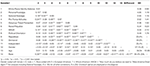
Table 1. Descriptive statistics and bivariate correlations amid study variables.
Main Hypothesis
We first assessed whether national nostalgia and personal nostalgia would be related to pro-Trump attitudes in the ways previously predicted. National nostalgia and personal nostalgia proneness were entered simultaneously in step two of the model to place their unique relationship with attitudes toward Trump. In footstep ane of the hierarchical model, political orientation significantly predicted pro-Trump attitudes such that college conservatism was associated with more positive attitudes of Trump, β = 0.59 t(192) = 10.08, p < 0.001. In footstep 2 of the model, national nostalgia was associated with more pro-Trump attitudes above and across political affiliation, β = 0.30, t(192) = 4.43, p < 0.001, supporting Hypothesis 1a. In contrast, personal nostalgia was not associated with pro-Trump attitudes in a higher place and across political orientation, β = −0.07, t(192) = −1.13, p = 0.259. Nostalgia predicted a pregnant proportion of variance in attitudes higher up and across political orientation, F (2, 189) = 9.xc, p < 0.001, R2Δ = 0.06.
To examine this relationship in a consolidated path modelv, Figure 1 displays Path Model 1, quantifying the relationship betwixt national and personal nostalgia and race, political orientation, ethnic identity salience, and pro-Trump attitudes. The model fit the data somewhat weakly due to the lower sample size [χ2(i) = 23.01, p < 0.001; CFI = 0.89; RMSEA = 0.34; SRMR = 0.03]. As shown in Model ane, Hypothesis 1 was again supported: national nostalgia predicted pro-Trump attitudes (β = 0.24, p < 0.001), whereas personal nostalgia was unrelated to pro-Trump attitudes (β = −0.08, p = 0.156).
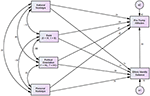
Figure i. Path assay of relationships between national/personal nostalgia, ethnic identity, and pro-Trump attitudes (Model 1). Note. Path coefficients stand for standardized estimates.
Inquiry Question ane
To assess whether there was an clan between race, political affiliation, and pro-Trump attitudes, we ran a 2 (Racial Identification) × three (Political Political party Affiliation) ANOVA. Racial identification was coded with 0 = White/European-American, i = Black/African-American (shortened to W/EA and B/AA going frontward). Political party affiliation was coded as ane = Republican, 2 = Democrat, and 3 = Independent and were analyzed using an indicator multicategorical contrast. For the purposes of this analysis, data from participants who did not identify with one of these three major political groups were excluded. The model included 59 Republicans (34 W/EA, 25 B/AA), 111 Democrats (48 W/EA, 63 B/AA), and 64 Independents (44 West/EA, 24 B/AA). The factorial model found that political party amalgamation was the only significant predictor of belongings positive attitudes toward President Trump, F (two, 228) = 47.73, p < 0.001, partial ηii = 0.thirty, with Republicans (M = 3.94, SD = 1.22) more in favor of the president than their Autonomous (1000 = 2.06, SD = 1.26) or Independent (Grand = 2.27, SD = ane.06) counterparts. There was no main event of participant race (Black or White) on attitudes toward the President, F (1, 228) = 0.47, p = 0.57, nor was there an interaction between political party affiliation and participant race, F (2, 228) = 0.05, p = 0.96. Figure 2 displays these results.
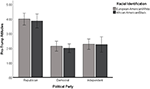
Effigy 2. Relationship between political political party affiliation and pro-Trump attitudes past racial identity. Note. Error confined represent 95% CIs around the mean for each subgroup.
To explore these results further, we examined whether ethnic identity salience, rather than race itself, may be an of import qualifying variable in explaining pro-Trump attitudes. We examined whether political political party (dummy coded with Republican = 0 to compare against Democrats and Independents) interacted with race (dummy coded with W/EA = 0) to predict racial identity salience (measured past the MEIM) using Hayes' PROCESS macro five. iii.4 (model i). Nosotros conducted a bootstrapped moderation assay with v,000 resamples, which indicated a meaning college-lodge interaction effect between political affiliation and race to predict ethnic identity salience, F (2, 228) = 3.23, p = 0.041, R2Δ = 0.024. An analysis of the simple gradient furnishings indicated that there was a stronger divergence in ethnic identity salience among White participants compared with Black participants. White Republicans (M = 3.47, SD = 0.92) reported that their racial identity was significantly more important to them than their White Autonomous [M = 3.04, SD = 0.91, b = −0.43, 95% CI = (−0.82, −0.04)] and Independent counterparts [One thousand = two.89, SD = 0.92, b = −0.59, 95% CI = (−0.98, −0.19)]; simple gradient departure F (2, 228) = 4.49, p < 0.001. In contrast, no significant difference in racial identity salience was found amidst Blackness/African-American participants; simple slope difference F (2, 228) = 0.63, p = 0.537. In fact, an analysis of the simple main effect of race amidst Republicans indicated that White Republicans felt their racial identity was every bit as important to them equally Blackness participants; Chiliad = 3.73, SD = 0.83, b = 0.24, 95% CI = (−0.sixteen, 0.63). Black Democrats [b = 0.threescore, 95% CI = (0.37, 0.83)] and Black Independents (b = 0.97, 95% CI = (0.57, ane.36)] reported significantly higher ethnic identity salience compared with White Democrats and Independents (see Figure 3).
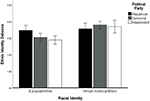
Effigy iii. Racial identity salience amidst Blackness/African-American and White/European-American participants of different political affiliations (Republican, Democrat, Independent). Annotation. Error confined represent 95% CIs around the mean for each subgroup.
We also examined whether racial identity salience qualified the relationship betwixt national nostalgia and pro-Trump attitudes. A moderation analysis using Hayes' PROCESS macro (model one) indicated that higher racial identity salience somewhat strengthened the relationship between national nostalgia and positive attitudes toward Trump, but only amid White participants; ΔR ii = 0.03, F (one, 77) = three.94, p = 0.051. Among those depression in racial identity salience, national nostalgia was unrelated to attitudes toward Trump; b = 0.27, 95% CI = (−0.03, 0.58). Those moderate [b = 0.43, 95% CI = (0.xviii, 70)] and high [b = 0.64, 95% CI = (0.31, 0.97)] in racial identity salience showed a strong relationship betwixt national nostalgia and pro-Trump attitudes.
As a final examination of Research Question 1, a second path model (Path Model 2, Figure iv) was compared with Path Model ane to once again examine the interaction between nostalgia and ethnic identity (on pro-Trump attitudes), and the interaction between political orientation and race (assessing its relationship with ethnic identity). When interpreting this model, it is of import to note that path models are more often than not considered ineffective in examining interaction effects (Meyers et al., 2016). Path Model two showed much improved fit relative to Path Model i [χ2(10) = 40.47, p < 0.001, CFI = 0.95, RMSEA = 0.09half-dozen; SRMR = 0.05]. Likely due to the limitations of path models to compute interaction effects, in contrast to what was shown in the Procedure model, the interaction between race and political orientation (measured on a continuous scale) was non significantly associated with ethnic identity (β = −0.08, p = 0.210). Additionally, the interaction term between national nostalgia and ethnic identity was no longer associated with pro-Trump attitudes (β = 0.thirteen, p = 0.607). This suggests that for White participants, greater national nostalgia was associated with increased indigenous identity.
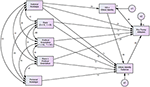
Figure 4. Path analysis estimating interaction effects (race × political orientation and ethnic identity × nostalgia) on pro-Trump attitudes. Note. Path coefficients represent standardized estimates.
Research Question two
We next examined whether national nostalgia was positively related to racial prejudice. Bivariate correlations indicated that national nostalgia was positively associated with both anti-Black racial prejudice measured by the Symbolic Racism Scale (SRS) as well every bit perceived realistic threat measured by the Realistic Threat Scale (RTS, encounter Table 1). To further examine the link between national nostalgia and racial prejudice, we tested whether racial prejudice moderated the link between national nostalgia and positive attitudes toward President Trump using Hayes' PROCESS macro (model 1) with 5,000 resamples. A meaning moderation effect was identified. Participants reporting higher prejudice exhibited a stronger human relationship betwixt national nostalgia and pro-Trump attitudes; ΔR 2 = 0.05, F (ane, 178) = 19.60, p < 0.001. Simple slopes were calculated and visualized using the interActive online utility, and are presented in Effigy v (McCabe et al., 2018). The relationship between national nostalgia and positive attitudes toward Trump was non-significant at low levels of prejudice (those at to the lowest degree −1 SD below the mean of SNS). Notwithstanding, for those moderate to high in racial prejudice (0, +1, or +two SDs above the mean of SNS), national nostalgia positively predicted pro-Trump attitudes (see Figure 5). Interestingly, this effect was constitute separately for both White [ΔR ii = 0.03, F (1, 77) = five.93, p = 0.02] and Blackness participants [ΔR 2 = 0.09, F (1, 97) = 17.44, p < 0.001], but there was no significant three-way interaction between national nostalgia, prejudice, and race (p = 0.xiv), and so the results in Figure v are displayed for all participants.
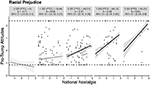
Figure 5. Relationship betwixt national nostalgia and pro-Trump attitudes chastened past anti-Black racial prejudice. Note. Plots display elementary slopes at −2, −1, 0, +1, and +ii SDs abroad from the mean of racial prejudice for all participants. PTCL, percentile.
Inquiry Question 3
Volition the relationship between national nostalgia and racial prejudice be mediated by increased threat sensitivity?
We last examined whether the relationship betwixt national nostalgia and racial prejudice would be mediated by outgroup threat perception (measured by the Realistic Threat Scale, RTS). A moderated mediation model was constructed using Hayes' Procedure macro (model viii) to assess whether the proposed mediational issue might differ betwixt European-American and African-American participants. As shown in Figure half-dozen, the model indicated a significant indirect effect of national nostalgia on prejudice through the mediator of perceived threat for both White/EA participants [β = 0.23, 95% CI = (0.12, 0.36)] and Black/AA participants [β = 0.22, 95% CI = (0.13, 0.32)]. The mediational indirect effect did not differ by participant race; β = 0.07, 95% CI = (−0.xv, 0.13).
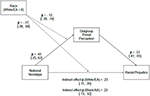
Figure 6. Mediation of national nostalgia human relationship with racial prejudice by outgroup threat perception, moderated by participant race.
To examine this question in the context of a path model, Path Model 3 (Effigy seven) displays the proposed relationships betwixt national nostalgia and racial prejudice. Model 3 showed a moderate fit with the data, χ(ii) = 65.eighty, p < 0.001; CFI = 0.79; RMSEA = 0.41; SRMR = 0.07). When accounting for political orientation, race, national nostalgia, personal nostalgia, racial threat sensitivity, and racial prejudice in a structural equation mediation model, national nostalgia directly predicted racial prejudice (β = 0.21, p < 0.001), whereas personal nostalgia did not (β = 0.03, p = 0.581). The relationship between national nostalgia and racial prejudice was significantly mediated by threat sensitivity [indirect outcome β = 0.xviii, 95% bias-corrected CI (0.10, 0.26)]. Interestingly, personal nostalgia likewise showed a weak indirect result on national nostalgia via threat sensitivity, but in a negative direction [indirect effect β = −0.07, 95% bias-corrected CI (−0.14, −0.01)]. This suggests that greater personal nostalgia may weakly predict lower racial prejudice via reduced racial threat sensitivity.
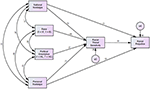
Figure 7. Path analysis of relationships between national/personal nostalgia and prejudice, mediated by racial threat sensitivity (Model 3). Notation. Path coefficients represent standardized estimates. Indirect effect of national nostalgia on racial prejudice through racial threat sensitivity was significant [β = 0.18; 95% bias-corrected CI (0.x, 0.26)].
Discussion
In our study, national nostalgia was associated with more positive feelings near President Trump, too equally increased perceived racial threat amid White respondents. In contrast, personal nostalgia was unrelated to support for Trump or perceived racial threat. When assessed in a path model, personal nostalgia was actually associated indirectly with lower anti-Black prejudice via decreased racial threat sensitivity. These findings align with evidence from samples outside the United States (e.m., Smeekes and Verkuyten, 2015; Smeekes et al., 2020) that personal and national nostalgia are distinct experiences with unique ramifications for intergroup attitudes and relations. Though our overall finding that national nostalgia predicted Trump support could reflect a strong semantic connection between Trump and its 2022 presidential campaign slogan, it too may betoken to the appeal of Trump'due south campaign—and its right wing, populist sentiments—among those initially prone to feeling national nostalgia. To ameliorate reply this question, our next analyses investigated more closely the relationship between national nostalgia and identity.
Our first inquiry question asked whether identity was associated with national nostalgia. We found partial evidence for this idea, as Republican participants expressed greater positive attitudes toward Trump. Nevertheless, at that place was no evidence of a relationship between race and support for the President. At first glance, this finding does not align with media narratives and political polling suggesting that Trump's messaging appealed mostly to White voters. However, although race itself did not predict back up for the President, racial identity salience moderated the link between national nostalgia and pro-Trump attitudes. White Republicans felt more strongly continued to their racial identity than Whites who identified as either Democrats or Independents. White Republicans too expressed significantly more positive feelings toward the President than other groups. In fact, they rated their racial identity every bit important as Black participants in our sample. This is notable, as information technology evidences farther back up for the influence of White identity on political attitudes (Schildkraut, 2015). As members of the bulk group, White individuals typically are less probable to think of themselves in terms of race than people of colour, for whom race is a more centralized component of their identity (Steck et al., 2003).
This finding suggests that the perception of demographic changes and threats to the ascendant ingroup in the Us may indeed have been a critical gene in voters' selection to support Trump. Some research suggests that, in the electric current political climate, White Americans may increasingly identify with their Whiteness, as a issue of threat resulting from shifting racial demographics (Jardina, 2019). However, there is an outcome of causality, every bit these correlational data could indicate that the perception of such a threat may increment the salience of one's racial identity. This threat may exist perceived more strongly by those for whom a White racial identity was already a more central part of their self-concept. For case, Schildkraut (2015) constitute that White Americans with higher White identity scores, along with heightened perception of discrimination confronting Whites and feeling a sense of linked fate with other White Americans, were substantially more likely to politically endorse a White candidate. This suggests that the threat to White identity, along with other related constructs, may influence political attitudes and may likewise offer an explanation on why leaders invoking national nostalgia may exist so attractive to some individuals. This type of rhetoric typically emphasizes collective identity discontinuity in order to foment feet well-nigh the state of the country while simultaneously offering a restorative outlet by identifying racial outgroups as scapegoats.
The role of intergroup attitudes was apparent when examining the relationship between national nostalgia and pro-Trump support. Nosotros found that national nostalgia significantly predicted racial prejudice and that this relationship was mediated by perceived outgroup threat. Interestingly, this mediational effect was found among both White/EA and Blackness/AA participants, although the lack of a significant interaction result may have been due to lower ability. Additionally, we found a stronger human relationship between national nostalgia and pro-Trump attitudes amid those who reported more than prejudice toward Black individuals. These findings align with prove that grouping emotions motivate intergroup attitudes and, in particular, outgroup derogation when outgroups are perceived to be a threat (Smith et al., 2007; Wildschut et al., 2014). In particular, these findings align with converging evidence that the content of collective nostalgia—what individuals perceive to be "the good old days" for their identity group—reflects salient sources of perceived threat (Wohl et al., 2020). This conceptual model, highlighting the content of collective nostalgia, as well explains differences between the emotional outcomes of personal and national nostalgia. Whereas, personal nostalgia enhances feelings of belonging past evoking memories of positive intrapersonal experiences in the face of ostracism or loneliness, national nostalgia may enhance belongingness by evoking positive thoughts nearly the "skilful old days" when one'due south group was perceived to exist higher in condition or less threatened by outgroups. Information technology is also possible that national nostalgia, like personal nostalgia, may enhance feelings of continuity in its own manner, by assuasive individuals to feel continued to a fourth dimension in which they believed their ingroup identity was less threatened or somehow stronger. Contempo work supports the notion that, analogous to personal nostalgia, enhancing feelings of self-continuity (Sedikides and Wildschut, 2019), national nostalgia is linked to feelings of ingroup continuity (Smeekes et al., 2018). A study across 27 countries found that national nostalgia was associated with stronger feelings of ingroup continuity (Smeekes et al., 2018); ingroup belonging but not prejudice (outgroup rejection) appeared to mediate this link. Since relatively picayune research on collective nostalgia, specially national nostalgia, has been undertaken, time to come work should examine these questions via multiple methods, particularly longitudinal and experimental designs, which tin can place whether and to what extent self-continuity is enhanced by (or itself predicts) collective nostalgia in response to outgroup threat.
Constraint on Generalizability
These data were obtained from a cross-sectional group of US Mturk workers in the Fall of 2017, then these results are most generalizable to American middle-aged populations (Huff and Tingley, 2015). Additionally, these considerations of intergroup threat perception and prejudice are nearly generalizable to White/EA and Blackness/AA social groups within the U.s., and future analysis of national nostalgia should continue to assess different ethnicities, races, and other relevant social categories.
Future Directions
These findings heighten the question on whether national nostalgia stems from a want by some to get back in time, due to perceived group identity threats. Time to come research should employ longitudinal or experimental methods, such as manipulating identity threat, to examine whether national nostalgia arises equally a defense against perceived threats to i's ingroup. Relatedly, it is only recently that national nostalgia has been manipulated (Smeekes and Verkuyten, 2015; Wohl et al., 2020), as the majority of national nostalgia research has been at the trait level. Further work evoking national nostalgia in experimental contexts would allow us to improve understand how this emotion interacts with intergroup attitudes, prejudice, and feelings of threat. Nosotros should also continue to examine how the importance of racial identity, including white racial identity, plays a part in their political attitudes and bodily voting behavior. The need for further enquiry in this area has grown substantially in recent years, especially in light of events such as those that took place in Charlottesville in 2022 and at the Usa Capitol Building in early 2021, in which large groups of White Nationalists gathered in events that ultimately turned fierce.
An additional question to be explored is the extent to which national nostalgia operates within specific cultures and nations. Although Trump's presidential tenure has ended, the importance of these findings is not constrained only to the rhetoric from his campaign. Rather, the apply of national nostalgia in political communication is widespread (Mols and Jetten, 2014; Smeekes et al., 2020) and has far-reaching implications. Hereafter research should examine the role of national nostalgia in shaping attitudes toward demagogues in a multifariousness of settings and when because a multifariousness of societal outcomes. Our findings suggest that national nostalgia may influence intergroup attitudes as a group-based emotion broadly through evoking positive emotions virtually ane's national group identity. However, the nature of the construct suggests information technology may also operate through evoking shared historical cognition and schemas about one'due south group within a specific nation. The phrase "make America great again" and other nostalgic political rhetoric is particularly controversial in the The states because minority groups have accomplished significant advances in civil rights in recent history, and a call to return to a former time may imply a phone call for a render to a former and less egalitarian social bureaucracy. Time to come research on national nostalgia should explore the nuances of this emotion and its expression among various ethnic and social groups in different countries. Expressions of national nostalgia may evoke intergroup hostility to a lesser extent within nations with different histories.
Future inquiry might also examine the extent to which perceptions of outgroup threat stem from realistic (e.yard., economic) vs. symbolic (e.g., social/moral) concerns. Prior enquiry has theorized that symbolic threats (rather than realistic threats) may be more psychologically influential on voter support for right-fly populist credo, as concerns well-nigh clearing and intergroup relations tend to emphasize the importance of preserving cultural homogeneity (Smeekes et al., 2020). Agreement the source and salience of perceived economic and cultural threats could help inform interventions to assuage anxiety, thus reducing prejudice toward outgroups. Finally, with the e'er-evolving demographic makeup of the United states of america (equally well as many other countries), further work in this area should include individuals who identify with other racial groups beyond White or Black, and should also be expanded to wait at dissimilar identities such as gender, sexual orientation, organized religion, immigrant status, social class, education level, and nation of origin.
Coda
National nostalgia, a form of collective nostalgic experience, is a promising lens through which to analyze attitudes, such as political and prejudicial attitudes, particularly when combined with assessments of identity salience and perceived outgroup threat. Research to date on national nostalgia is relatively new. Although this phenomenon has been studied elsewhere (mostly in European and Asian nations), this is the starting time written report, to our knowledge, to examine the US political mural. Personal nostalgia—a wistful longing for one'due south personal past—does non have the same associations with political and group attitudes, and only moderately correlates with national nostalgia. In contrast, national nostalgia, peculiarly in combination with white identity salience and outgroup threat perception, predicted both prejudice and political attitudes.
At that place may exist some irony in the possibility that national nostalgia may include beliefs for a past that never was; in this case, an America that was non equally white as some recall. Still, these national nostalgic feelings announced to be linked to of import social attitudes, and thus are worthy of farther investigation.
Data Availability Statement
The datasets presented in this study can be constitute in online repositories. All reported study hypotheses, measures, and methods were preregistered through the Open Science Framework, bachelor at https://osf.io/mwh6n. De-identified data and study information tin can be viewed at https://osf.io/6j4gm/. Some survey measures listed in the preregistration were not analyzed in this study and therefore not listed in this report.
Ethics Statement
The studies involving human participants were reviewed and approved past Virginia Commonwealth Academy IRB. The patients/participants provided their written informed consent to participate in this study.
Author Contributions
AB, AC, and CH compiled and submitted all documentation for IRB ideals review and OSF pre-registration. AB and Air conditioning oversaw data drove and assay. AB wrote the first draft of the manuscript. All authors collectively contributed to the conception and design of the study and assisted with subsequent revisions.
Disharmonize of Interest
The authors declare that the research was conducted in the absence of any commercial or financial relationships that could be construed as a potential disharmonize of involvement.
Footnotes
1. ^We note that intergroup relations were besides a salient theme in the 2022 election (e.grand., the role of the Black Lives Matter movement); however, every bit our information were collected in 2017, we emphasize the 2022 ballot in this paper.
two. ^Though a majority of all non-White voters supported Hillary Clinton over Donald Trump, the go out polls showed that the greatest differential was among Black voters, who voted in Clinton's favor by a margin of 89 to eight% (CNN, 2016). Thus, we chose to use Black voters as a comparison group to the Caucasian sample.
3. ^The Pearson correlation between national nostalgia and outgroup prejudice reported past Smeekes and Verkuyten, 2015, study 2).
four. ^The authors would similar to notation that this calibration was not included in the original pre-registration, as it was published just prior to the time this study was adult. However, the determination was made prior to data collection to utilize this validated scale as a more directly and statistically sound way to measure the construct of national nostalgia.
v. ^Although structural equation models are ofttimes used to model paths among composite variables (such every bit national and personal nostalgia), we opted to use a path model for these analyses given that our sample was not large enough to justify inclusion of all individual items in the model.
6. ^Although RMSEA greater than 0.08 is often considered marginal fit, RMSEA has been known to become inflated with sample sizes lower than 200 (Meyers et al., 2016).
References
Barrett, F. S., Grimm, 1000. J., Robins, R. Westward., Wildschut, T., Sedikides, C., and Janata, P. (2010). Music-evoked nostalgia: affect, memory, and personality. Emotion 10, 390–403. doi: ten.1037/a0019006
PubMed Abstruse | CrossRef Full Text | Google Scholar
Batcho, M. I., DaRin, Chiliad. 50., Nave, A. G., and Yaworsky, R. R. (2008). Nostalgia and identity in vocal lyrics. Psychol. Aesth. Creativ. Arts 2, 236–244. doi: x.1037/1931-3896.two.four.236
CrossRef Full Text | Google Scholar
Cheung, W. Y., Hepper, E. G., Reid, C. A., Green, J. D., Wildschut, T., and Sedikides, C. (2020). Predictable nostalgia: looking forrard to looking dorsum. Cogn. Emot. 34, 511–525. doi: 10.1080/02699931.2019.1649247
PubMed Abstract | CrossRef Full Text | Google Scholar
Cheung, W. Y., Sedikides, C., and Wildschut, T. (2017). Nostalgia proneness and reduced prejudice. Pers. Individ. Dif. 109, 89–97. doi: 10.1016/j.paid.2016.12.045
CrossRef Total Text | Google Scholar
Craig, M. A., and Richeson, J. A. (2018). Bulk no more? The influence of neighborhood racial diversity and salient national population changes on whites' perceptions of racial bigotry. RSF: the Russell Sage Foundation. J. Soc. Sci. 4, 141–157. doi: 10.7758/rsf.2018.4.v.07
CrossRef Full Text | Google Scholar
Craig, M. A., and Richeson, J. A. (2014). More than diverse yet less tolerant? How the increasingly-various racial landscape affects white Americans' racial attitudes. Pers. Soc. Psychol. Bull. 40, 750–761. doi: 10.1177/0146167214524993
PubMed Abstract | CrossRef Full Text | Google Scholar
Dimitriadou, Thousand., Maciejovsky, B., Wildschut, T., and Sedikides, C. (2019). Collective nostalgia and domestic country bias. J. Exp. Psychol. Appl. 25, 445–457. doi: 10.1037/xap0000209
PubMed Abstruse | CrossRef Full Text | Google Scholar
Dover, T. 50., Major, B., and Kaiser, C. R. (2016). Members of high-status groups are threatened by pro-diversity organizational letters. J. Exp. Soc. Psychol. 62, 58–67. doi: 10.1016/j.jesp.2015.ten.006
CrossRef Full Text | Google Scholar
Edwards, 1000. Due south., and Rushin, S. (2018). The Effect of President Trump'southward Election on Hate Crimes. Social Science Research Network.
Google Scholar
Faul, F., Erdfelder, E., Buchner, A., and Lang, A. G. (2009). Statistical ability analyses using Yard* Power 3.i: tests for correlation and regression analyses. Behav. Res. Methods 41, 1149–1160. doi: 10.3758/BRM.41.4.1149
CrossRef Full Text | Google Scholar
Giles, M. W. (1977). Percent black and racial hostility: an former supposition reexamined. Soc. Sci. Q. 58, 412–417. doi: 10.1177/104438947705800704
CrossRef Full Text | Google Scholar
Dark-green, J. D., Cairo, A. H., Sedikides, S., and Wildschut. (2021). The ties that demark: university nostalgia fosters relational and collective academy date. Forepart. Soc. Psychol. 11:580731. doi: 10.3389/fpsyg.2020.580731
PubMed Abstract | CrossRef Full Text | Google Scholar
Hayes, A. F. (2013). Introduction to Mediation, Moderation, and Conditional Process Assay: A Regression-Based Arroyo. New York, NY: The Guilford Press.
Google Scholar
Henry, P. J., and Sears, D. O. (2002). The symbolic racism 2000 scale. Polit. Psychol. 23, 253–283. doi: 10.1111/0162-895X.00281
CrossRef Total Text | Google Scholar
Hepper, E. M., Ritchie, T. D., Sedikides, C., and Wildschut, T. (2012). Odyssey'southward end: Lay conceptions of nostalgia reflect its original Homeric meaning. Emotion 12, 102–119. doi: 10.1037/a0025167
PubMed Abstruse | CrossRef Full Text | Google Scholar
Hooghe, Yard., and Dassonneville, R. (2018). Explaining the trump vote: the effect of racist resentment and anti-immigrant sentiments. PS Political Sci. Politics 51, 528–534. doi: x.1017/S1049096518000367
CrossRef Full Text | Google Scholar
Huff, C., and Tingley, D. (2015). "Who are these people?" Evaluating the demographic characteristics and political preferences of MTurk survey respondents. Res. Politics 2, 1–12. doi: 10.1177/2053168015604648
CrossRef Full Text | Google Scholar
Jardina, A. (2019). White Identity Politics. New York, NY: Cambridge Academy Printing.
Google Scholar
Major, B., Blodorn, A., and Blascovich, G. M. (2018). The threat of increasing diversity: why many White Americans support Trump in the 2022 presidential election. Group Proc. Intergroup Relat. 21, 931–940. doi: 10.1177/1368430216677304
CrossRef Total Text | Google Scholar
Martinovic, B., Jetten, J., Smeekes, A., and Verkuyten, Grand. (2017). Commonage memory of a dissolved country: group-based nostalgia and guilt assignment every bit predictors of interethnic relations between diaspora groups from former Yugoslavia. J. Soc. Political Psychol. 5, 588–607. doi: 10.5964/jspp.v5i2.733
CrossRef Total Text | Google Scholar
McCabe, C., Kim, D., and King, Chiliad. (2018). Improving nowadays practices in the visual display of interactions. Adv. Methods Pract. Psychol. Sci. one, 147–165. doi: x.1177/2515245917746792
CrossRef Full Text | Google Scholar
Meyers, L. Thousand., Garst, 1000., and Guarino, A. J. (2016). Applied Multivariate Research: Design and Interpretation. Thousand Oaks, CA: Sage.
Google Scholar
Mols, F., and Jetten, J. (2014). No guts, no glory: how framing the collective by paves the mode for anti-immigrant sentiments. Int. J. Intercult. Relat. 43, 74–86. doi: 10.1016/j.ijintrel.2014.08.014
CrossRef Full Text | Google Scholar
Pettigrew, T. F. (2017). Social psychological perspectives on Trump supporters. J. Soc. Political Psychol5, 107–116. doi: 10.5964/jspp.v5i1.750
CrossRef Full Text | Google Scholar
Phinney, J. S., and Ong, A. D. (2007). Conceptualization and measurement of ethnic identity: current status and hereafter directions. J. Couns. Psychol. 54, 271–281. doi: 10.1037/0022-0167.54.three.271
CrossRef Full Text | Google Scholar
Reid, C. A., Dark-green, J. D., Wildschut, T., and Sedikides, C. (2015). Odor-evoked nostalgia. Retentiveness 23, 157–166. doi: x.1080/09658211.2013.876048
CrossRef Total Text | Google Scholar
Routledge, C., Arndt, J., Sedikides, C., and Wildschut, T. (2008). A blast from the past: the terror management function of nostalgia. J. Exp. Soc. Psychol. 44, 132–140. doi: 10.1016/j.jesp.2006.xi.001
CrossRef Full Text | Google Scholar
Schaffner, B. F., Macwilliams, M., and Nteta, T. (2018). Understanding White polarization in the 2022 vote for president: the sobering role of racism and sexism. Polit. Sci. Q. 133, 9–34. doi: 10.1002/polq.12737
CrossRef Full Text | Google Scholar
Schildkraut, D. J. (2015). "Does condign American create a meliorate American? How identity attachments and perceptions of discrimination affect trust and obligation," in Fear, Anxiety, and National Identity, eds Due north. Foner and P. Simon (New York, NY: The Russell Sage Foundation).
Google Scholar
Seate, A. A., and Mastro, D. (2015). Media's influence on clearing attitudes: an intergroup threat theory approach. Commun. Monogr. 83, 194–213. doi: 10.1080/03637751.2015.1068433
CrossRef Full Text | Google Scholar
Sedikides, C., and Wildschut, T. (2019). The sociality of personal and collective nostalgia. Eur. Rev. Soc. Psychol. 30, 123–173. doi: ten.1080/10463283.2019.1630098
CrossRef Full Text | Google Scholar
Sedikides, C., Wildschut, T., Arndt, J., and Routledge, C. (2008). Nostalgia: past, present, and futurity. Curr. Dir. Psychol. Sci. 17, 304–307. doi: ten.1111/j.1467-8721.2008.00595.ten
CrossRef Total Text | Google Scholar
Sedikides, C., Wildschut, T., Routledge, C., and Arndt, J. (2015a). Nostalgia counteracts cocky-discontinuity and restores self continuity. Eur. J. Soc. Psychol. 45, 52–61. doi: ten.1002/ejsp.2073
CrossRef Total Text | Google Scholar
Sedikides, C., Wildschut, T., Routledge, C., Arndt, J., Hepper, E. G., and Zhou, Ten. (2015b). To nostalgize: mixing memory with bear upon and desire. Adv. Exp. Soc. Psychol. 51, 189–273. doi: 10.1016/bs.aesp.2014.10.001
CrossRef Full Text | Google Scholar
Seger, C. R., Smith, E. R., and Mackie, D. K. (2009). Subtle activation of a social categorization triggers group-level emotions. J. Exp. Soc. Psychol. 45, 460–467. doi: 10.1016/j.jesp.2008.12.004
CrossRef Total Text | Google Scholar
Skelley, G. (2017). Just How Many Obama 2012-Trump 2022 Voters were there? Rasmussen Reports.
Google Scholar
Smeekes, A. (2015). National nostalgia: a group-based emotion that benefits the in-group simply hampers intergroup relations. Int. J. Intercult. Relat. 49, 54–67. doi: 10.1016/j.ijintrel.2015.07.001
CrossRef Total Text | Google Scholar
Smeekes, A., and Jetten, J. (2019). Longing for one's domicile country: national nostalgia and acculturation amid immigrants and natives. Int. J. Intercult. Relat. 69, 131–150. doi: ten.1016/j.ijintrel.2019.02.001
CrossRef Total Text | Google Scholar
Smeekes, A., Jetten, J., Verkuyten, Thou., Wohl, M. J., Jasinskaja-Lahti, I., Ariyanto, A., et al. (2018). Regaining in-group continuity in times of anxiety well-nigh the group's time to come. Soc. Psychol. 49, 311–329. doi: ten.1027/1864-9335/a000350
CrossRef Full Text | Google Scholar
Smeekes, A., and Verkuyten, G. (2015). The presence of the by: identity continuity and group dynamics. Eur. Rev. Soc. Psychol. 26, 162–202. doi: 10.1080/10463283.2015.1112653
CrossRef Full Text | Google Scholar
Smeekes, A., Verkuyten, G., and Martinovic, B. (2014). Longing for the country'south good old days: national nostalgia, autochthony behavior, and opposition to Muslim expressive rights. Br. J. Soc. Psychol. 54, 561–580. doi: 10.1111/bjso.12097
PubMed Abstract | CrossRef Full Text | Google Scholar
Smeekes, A., Wildschut, T., and Sedikides, C. (2020). Longing for the "good onetime days" of our country: national nostalgia as a new primary-frame of populist radical-right parties. J. Theoret. Soc. Psychol. doi: 10.1002/jts5.78
CrossRef Full Text | Google Scholar
Smith, E. R., and Mackie, D. Yard. (2016). Representation and incorporation of close others' responses: the RICOR model of social influence. Pers. Soc. Psychol. Rev. 20, 311–331. doi: x.1177/1088868315598256
PubMed Abstract | CrossRef Total Text | Google Scholar
Smith, E. R., Seger, C. R., and Mackie, D. M. (2007). Can emotions be truly group level? Evidence for four conceptual criteria. J. Pers. Soc. Psychol. 93, 431–446. doi: 10.1037/0022-3514.93.iii.431
PubMed Abstruse | CrossRef Full Text | Google Scholar
Steck, L. W., Heckert, D. M., and Heckert, D. A. (2003). The salience of racial identity amid African-American and White students. Race Soc. 6, 57–73. doi: ten.1016/j.racsoc.2004.09.005
CrossRef Full Text | Google Scholar
Stephan, Due west. Grand., Boniecki, One thousand. A., Ybarra, O., Bettencourt, A., Ervin, K. S., Jackson, L. A., et al. (2002). The office of threats in the racial attitudes of Blacks and Whites. Pers. Soc. Psychol. Bull. 28, 1242–1254. doi: 10.1177/01461672022812009
CrossRef Full Text | Google Scholar
Stephan, West. Thousand., and Stephan, C. W. (2000). "An integrated threat theory of prejudice," in Reducing Prejudice and Discrimination ed Oskamp, S. (Mahwah, NJ: Psychology Press), 23–45.
PubMed Abstract | Google Scholar
Stephan, W. Chiliad., Ybarra, O., and Bachman, G. (1999). Prejudice toward immigrants. J. Appl. Soc. Psychol. 29, 2221–2237. doi: 10.1111/j.1559-1816.1999.tb00107.x
CrossRef Full Text | Google Scholar
van Dijke, M., Wildschut, T., Leunissen, J., and Sedikides, C. (2015). Nostalgia buffers the negative touch of low procedural justice on cooperation. Organ. Behav. Hum. Decis. Process. 127, xv–29. doi: ten.1016/j.obhdp.2014.11.005
CrossRef Total Text | Google Scholar
Wildschut, T., Bruder, M., Robertson, South., van Tilburg, W. A. P., and Sedikides, C. (2014). Collective nostalgia: a group-level emotion that confers unique benefits on the group. J. Pers. Soc. Psychol. 107, 844–863. doi: 10.1037/a0037760
PubMed Abstract | CrossRef Full Text | Google Scholar
Wildschut, T., Sedikides, C., Arndt, J., and Routledge, C. (2006). Nostalgia: content, triggers, functions. J. Pers. Soc. Psychol. 91, 975–993. doi: 10.1037/0022-3514.91.five.975
CrossRef Full Text | Google Scholar
Wohl, M. J., Stefaniak, A., and Smeekes, A. (2020). Longing is in the memory of the beholder: collective nostalgia content determines the method members will support to brand their group great again. J. Exp. Soc. Psychol. 91:104044. doi: ten.1016/j.jesp.2020.104044
CrossRef Full Text | Google Scholar
Zhou, X., Sedikides, C., Wildschut, T., and Gao, D. G. (2008). Counteracting loneliness: on the restorative office of nostalgia. Psychol. Sci. 19, 1023–1029. doi: 10.1111/j.1467-9280.2008.02194.ten
PubMed Abstract | CrossRef Total Text | Google Scholar
Source: https://www.frontiersin.org/articles/10.3389/fpsyg.2021.555667/full
0 Response to "This Would Actually Make America Great Again"
ارسال یک نظر